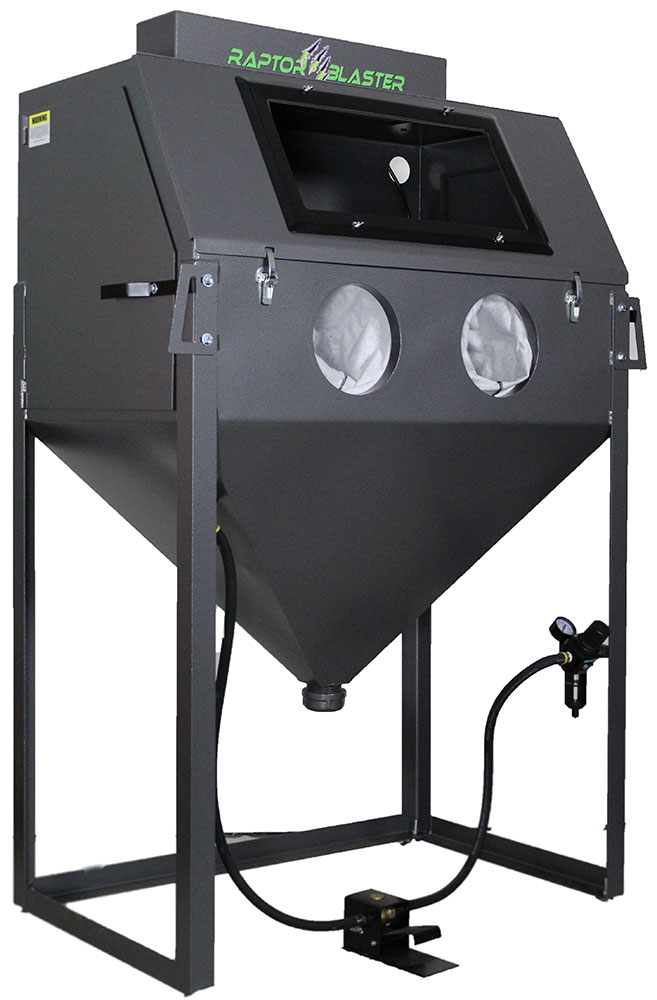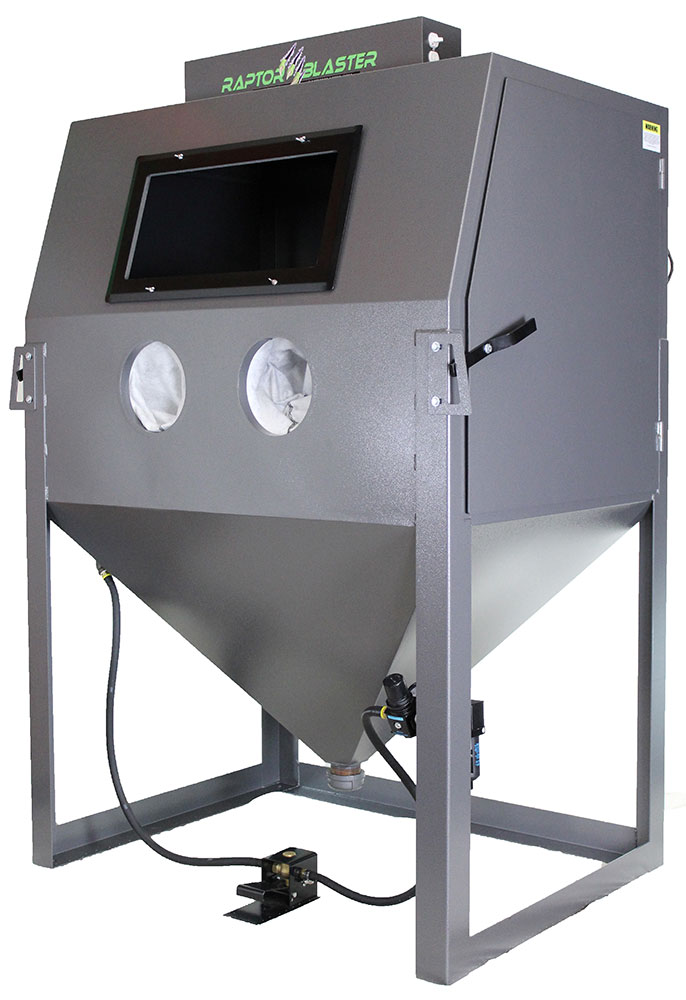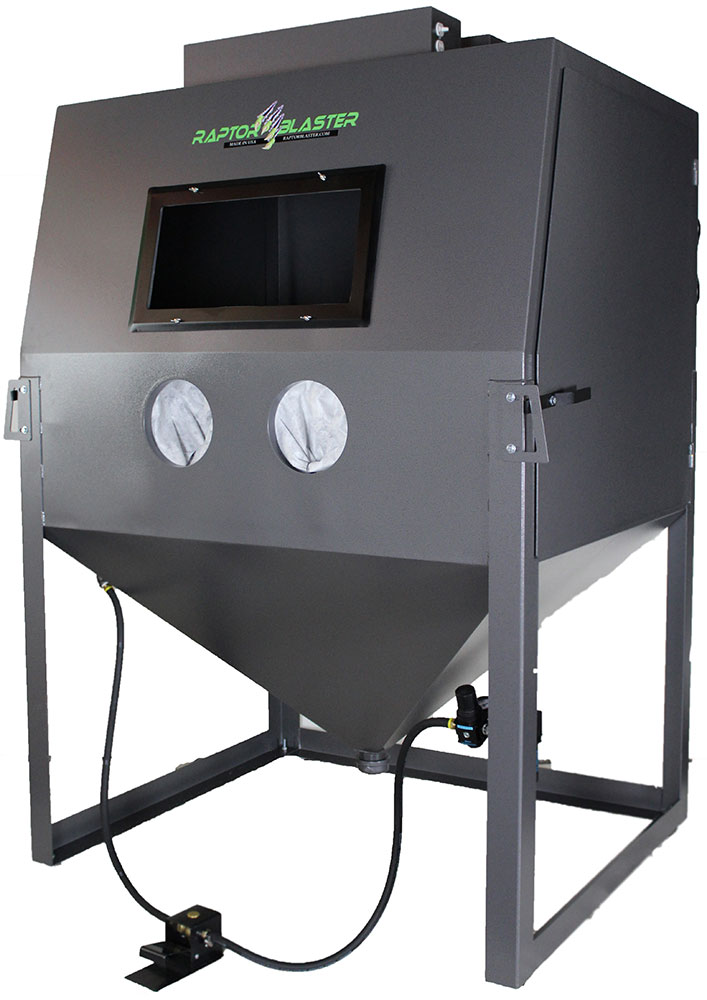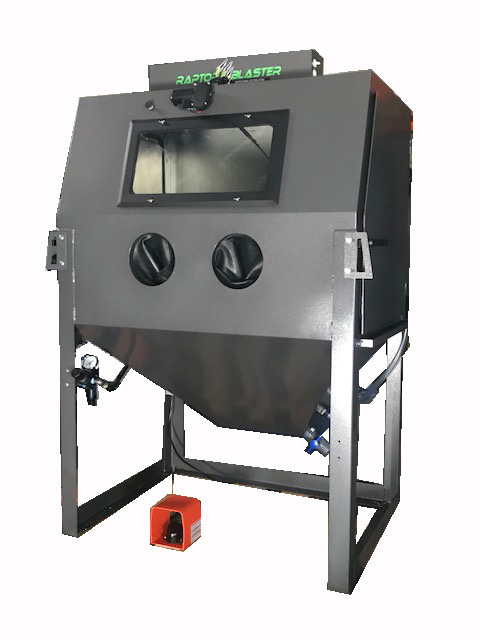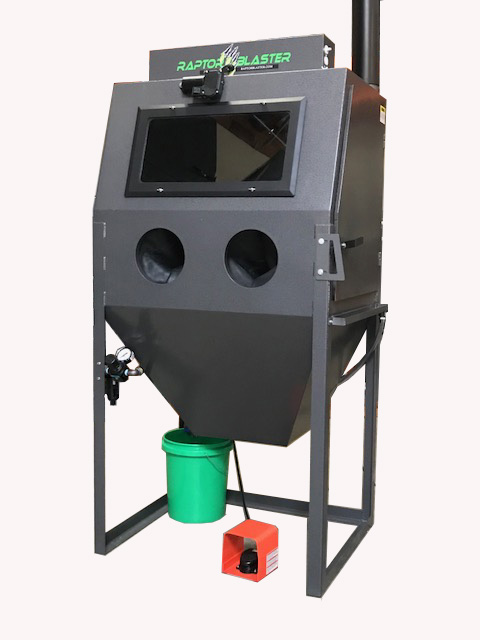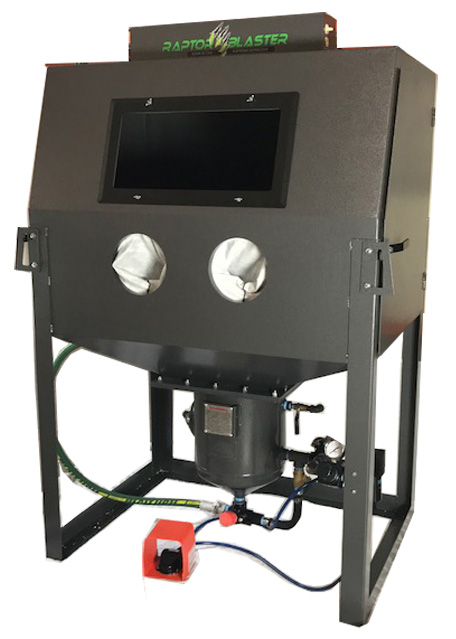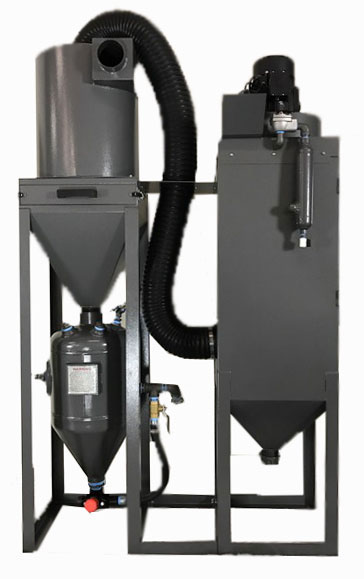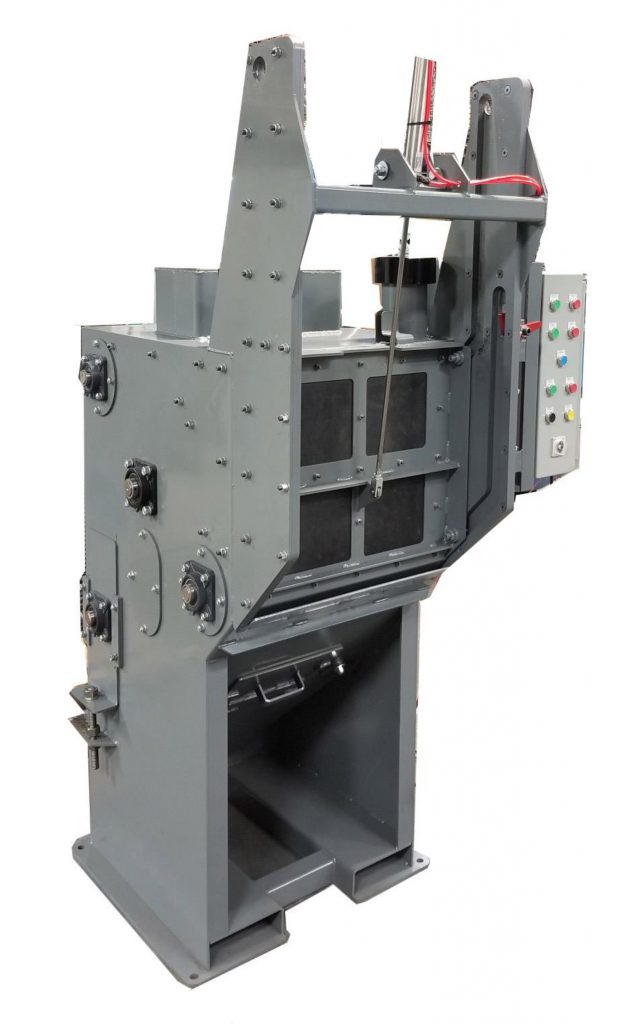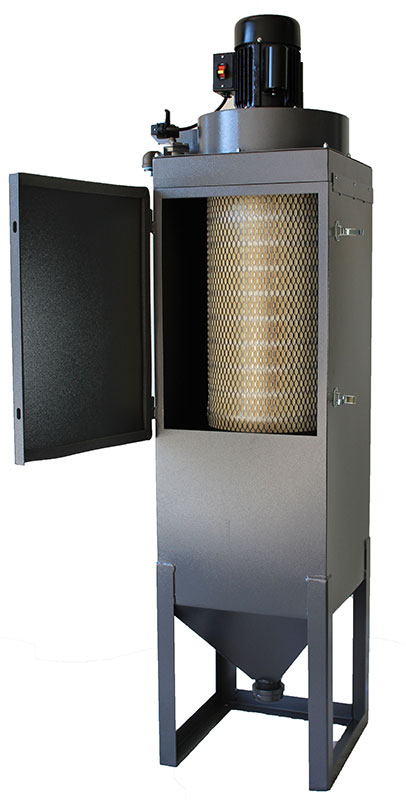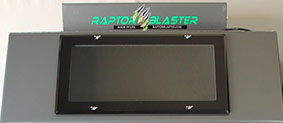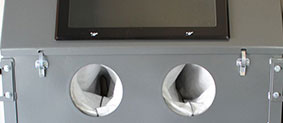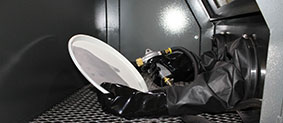
To recycle abrasive blasting material such as baking soda, sand or walnut shells, keep the abrasive material in an enclosed environment. This means that in order to recycle the material, you must use a special blasting cabinet. That being said, you almost always can recycle abrasive materials to use again many times before the material is no longer adequate to strip rust and paint from hard surfaces. Continue reading
Natrium Soda Blasting Media
Now that you have chosen to use a Soda Blasters manufactured by Soda Works you have cleared the biggest hurdle in in claiming your place among the most productive soda blasting companies in the country. But owning a Buster Blaster system is only part of the equation. The results you obtain will vary with the type of soda blasting media you choose to use. Continue reading
Husky Sandblasting Kit
Easily removes rust, scale and paint from parts and small equipment, leaving a satin finish ready for paint or further preparation. Includes: Sandblast gun with ceramic nozzle, 10 ft. hose, steel pick-up tube and Allen wrench. Draws abrasives from bucket. Continue reading
Soda Blasting Project
Soda Blasting/Media Blasting
Based on our experience and the available assortment of blast media, SRP Environmental can choose the right media for your application. Some examples of the types of media we use are:
what blasting media to use?
Q:I got my shot blaster and compressor last week and currently building a blast cabinet. I am going to be blasting alloy wheels and motorcycle frame in preparation for powder coating. I may buy a chemical stripper to remove old powder coating from the alloys. What media would you guys recommend for blasting alloy wheels etc, aluminum oxide, chilled iron ?? Do any of these products have bad points?
Portable Abrasive Blast Equipment
Mobile dry abrasive blast systems are typically powered by a diesel air compressor. The air compressor provides a large volumes of high pressure air to a single or multiple “blast pots”. Blast pots are pressurized, tank like containers, filled with abrasive material, used to allow an adjustable amount of blasting grit into the main blasting line. The number of blast pots is dictated by the volume of air the compressor can provide. Fully equipped blast systems are often found mounted on semi-tractor trailers, offering high mobility and easy transport from site to site.others are hopper fed types making them light weight and more mobile
Blasting Media Comparison Chart
When using a Skat Blast Cabinet, a variety of dry abrasives can be used depending on the requirements of the user.
Generally, the higher the grit number, the fi ner the abrasive. The fi ner the abrasive, the smoother the fi nish. Coarse-grit abrasives cut fast, but the fi nish isn’t quite as smooth as with fi ne-grit abrasives.
Most popular abrasives are Glass Beads, 1st Choice, and Speed Bead for a very fi ne fi nish on parts; Skat Magic™ for a medium fi nish and faster production. In addition, ground Walnut Shells can be used for special applications. Aluminum Oxide is another popular abrasive for fast cut and long life.
When abrasive blasting aluminum, brass or softer metals, use a lower air pressure (40-60 psi) for best results. The same applies to carving or etching glass. Hard metals such as fenders, bumpers, etc., can be cleaned best using 50-80 psi.
We recommend the cabinet hookup kit for regulating air pressure and collecting moisture effectively.
| Grit Size | Abrasive Type | Cleaning Time* 6″x6″ area | Type of Appearance / Texture | Abrasive Life | Dust Level | Recommended Abrasive Use |
| 35-60 | Walnut Shells | 15.7 minutes | Dull / No Texture | GOOD | High | Paint & carbon removal |
| 60-80 | Glass Beads | 5.0 minutes | Satin / Very Fine | BETTER | Low | General parts & automotive cleaning |
| 30-40 | Plastic | 1.6 minutes | Dull / No Texture | BETTER | Low | Paint & light oxidation removal |
| 80 | Steel Grit | 1.3 minutes | Flat / Fine | BETTER | Low | Rust, paint & scale removal |
| 60-90 | 1st Choice | 1.3 minutes | Flat / Very Fine | BETTER | Medium | Rust, paint & scale removal |
| 50-80 | Speed Bead | 1.0 minute | Satin / Very Fine | BEST | Low | General automotive cleaning & fi nishing |
| 40-80 | Skat Magic | 45 seconds | Flat / Medium | GOOD | Medium | Rust, paint & scale removal |
| 46 | Alum. Oxide | 38 seconds | Flat / Coarse | BEST | Low | Glass etching & automotive cleaning |
| 80 | Silicon Carbide | 38 seconds | Flat / Medium | BEST | Low | Glass etching & automotive cleaning |
Cleaning Time based on removing the paint fi nish from a mid 1980′s factory fender down to bare metal. Using a Skat Blast Abrasive Blast Cabinet with 15-20 cfm @ 80 psi and a medium nozzle and air jet installed in the gun. The fender consisted of a sealer coat, primer coat, and baked factory paint coat.
Dry Ice Blasting Comparison Chart
The Dry Ice Blasting process is superior to blasting with sand, glass beads and other types of cleaning methods for numerous reasons. As an Eco-friendly cleaning alternative, the dry ice cleaning method is quickly becoming favored for environmental as well as production reasons. Due to the nature of the Dry Ice Blasting process, there is no waste to be disposed of. Tremendous performance gains of little to no production downtime, quality of the clean, no clean-up, and minimized damage to equipment make Dry Ice Blasting a cost-effective cleaning option.
Dry Ice Blast Cleaning vs Traditional Methods
Blasting Cleaning Technique |
Waste for Disposal |
Abrasive |
Toxic |
Electrically Conductive |
Performance Comparison |
Dry Ice |
No | No | No | No | Excellent |
Sand |
Yes | Yes | No* | No | OK |
Glass Beads |
Yes | Yes | No* | No | OK |
Walnut Shells |
Yes | Yes | No* | No | Limited |
Steam |
No | No | No | Yes | Poor |
Solvents |
Yes | No | Yes | Yes | Limited |
| * Each of these blasting materials becomes contaminated upon contact if used to clean hazardous objects. When that happens, these materials are then classified as toxic waste requiring safe and proper disposal. | |||||
Silicon Carbide Abrasive Price
Silicon Carbide is the highest-quality abrasive in our line – stays sharper and lasts longer than any other abrasive. This abrasive is the favorite for glass etching due to its high quality and ability to be recycled over and over again. Grit Size 80, gray color.
(NOTE: Due to the fast cutting action of this abrasive, nozzles, pickup tube, power head, vac bag, vac motor, and other cabinet components may wear rapidly.)
TECH TIP: When using a Skat Blast Cabinet, a variety of dry abrasives can be used. Generally, the higher the grit number, the finer the abrasive. The finer the abrasive, the smoother the finish. Coarse-grit abrasives cut fast, but the finish isn’t as smooth as fine-grit abrasives.
We stock a variety of long-wearing abrasives, each formulated to obtain a desired finish. Experiment with each to discover which works best for your application, or call our tech line: 330-533-3384, Ext. 22.
NOTE – Abrasives are sold on a nonreturnable basis. No warranty is made as to satisfactory performance for any particular purpose. We suggest experimenting with each to determine which works best for individual applications. An MSDS is packed with every abrasive.
| Item # | Description | Price |
| 6706-50 | Silicon Carbide, 50 lbs | $119.00 |
| 6706-500 | Silicon Carbide, 500 lbs (10 boxes) | $1170.00 |
| 6706-1000 | Silicon Carbide, 1000 lbs (20 boxes) | $2300.00 |
| 6706-2000 | Silicon Carbide, 2000 lbs (40 boxes) | $4600.00 |
| 6706-25 | Silicon Carbide Abrasive, 25 lbs | $79.00 |
| 1360-16 | Abrasive Sifter Screen | $13.95 |
| 6120-07 | Abrasive Catcher | $19.95 |
Sponge Blasting Media
Under previous efforts, the NDCEE and NSWC-CD tested alternatives at the NDCEE Demonstration Facility, including sponge blasting, to current coatings removal and etching methods. The NDCEE utilized these efforts to help identify potential alternatives to chemical or mechanical coatings removal processes for use on delicate substrates, many of which are also dimensionally critical parts.
Technology Description
The sponge blasting technology cleans, etches, and removes coatings from various types of substrates. It uses an air-propelled open cell, water-based polyurethane foam cleaning media (also known as sponge media). The foam material can be impregnated with abrasive grit to enhance the performance of the media. The abrasive media may contain a variety of grit including aluminum oxide, steel, and plastic. The ability to use different media types gives the system flexibility by providing different characteristics and blasting capabilities.The foam cleaning media are absorptive and, when wetted with a cleaner or surfactant,can be used to remove a variety of surface contaminants and control dust without excess wastewater.
A feed unit is used to deliver sponge media to the surface. A media classifier is required to handle recycling chores. This classifier operates by collecting the sponge blast media and running the media through an electrically powered sifter, which separates the sponge media into four categories: oversized debris, reusable debris, reusable media, and fines (consisting of spent media and dust). Typically, 85–90% of the sponge media is reusable after each blast cycle. Using a classifier, the media can be recycled approximately 5–7 times for low dust applications. The amount of times that the media can be recycled depends on the type of surface and the contaminants that are removed from the surface. Some applications have shown up to 18 uses before the media are no longer productive. Typically, the waste that is generated with sponge media blasting is minimal because the media are recyclable. The disposal method depends on the type of coating or substance that was removed from the surface. Generally, if the substance that is being removed is classified as nonhazardous waste, then the spent media and the material that were removed are placed into a drum and sent to a landfill. If the substance that is being removed is classified as a hazardous waste, such as a radioactive material or a lead-based paint, then it must be placed in an approved container (55-gallon drum) and sent to an approved disposal facility.
Technology Benefits and Advantages
• Decreases solid waste generated from non-recyclable blasting media (e.g., garnet and black beauty) and use of chemical strippers
• Reduces labor and operating costs as a result of decreased preremoval preparation and postremoval cleanup
• Improves safety and worker health conditions due to the elimination of airborne emissions of heavy metals and other contaminants when used with vacuum recovery
• Involves reusable media
• Helps facilities to comply with Executive Order 13148, which requires the DoD to decrease the amount of waste that is generated at federal facilities, as well as environmental regulations regarding airborne particulate emissions
Technology Limitations
• Not as aggressive on metallic substrates as some abrasive media; however, unlike the sponge medium, these more abrasive media do not have the capability to be used on delicate substrates.
Plastic Blasting Media
Abrasive Blasting Media
Soda Blasting Media
Sandblasting Media
Shot Blasting Media
Garnet Blasting Media
Grit Blasting
Blasting Media Guides
Blasting Equipment
Applications